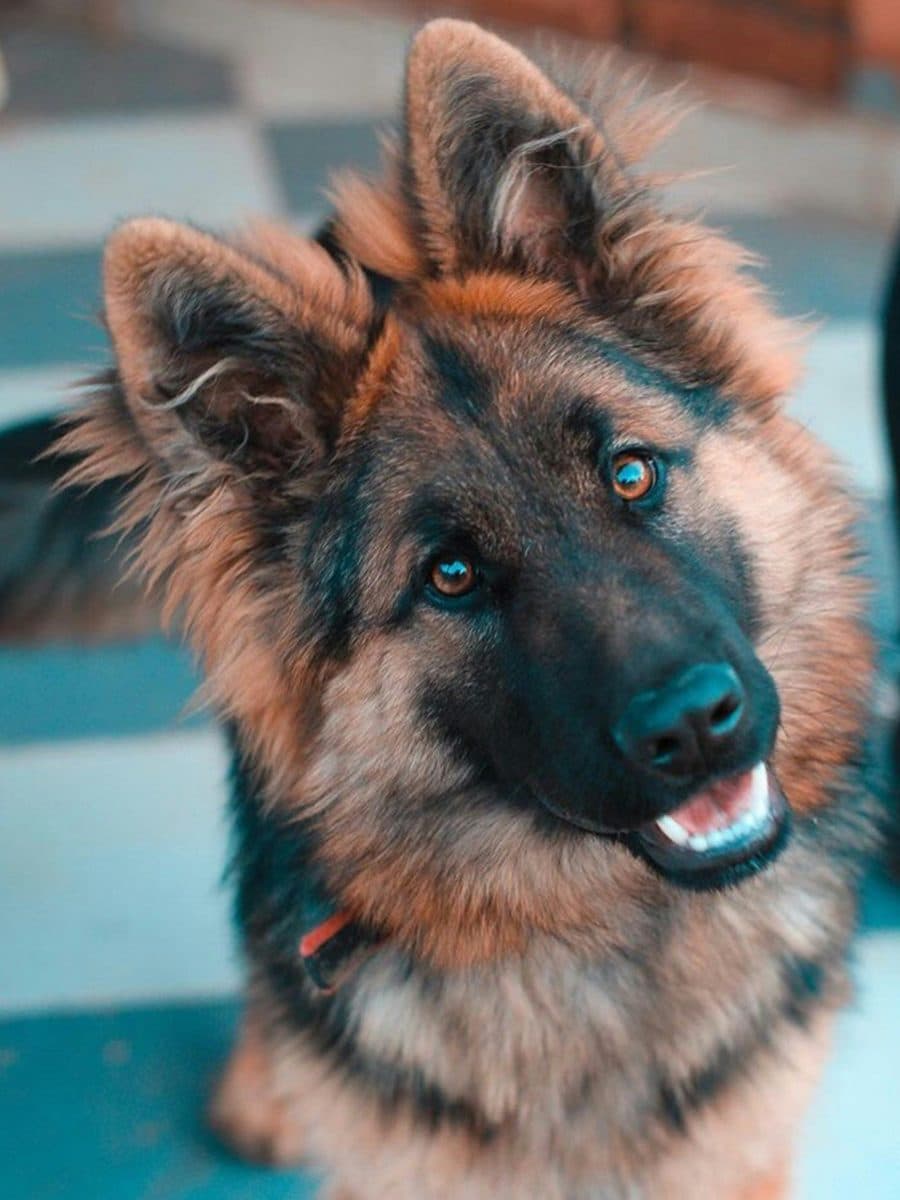
Confident, highly trainable working dogs that need a job. Excellent with committed owners; a poor fit for households wanting a low-engagement pet.
At a glance
Lifespan
12–14 years
Adult weight
50–90 lbs
ConfidentLoyalWork-driven
Living with one
Energy level5/5
Grooming needs3/5
Trainability5/5
Good with kids4/5
Health tests to ask for
A responsible German Shepherd breeder should be able to show results for both parents. If they can't, walk away.
Living with a German Shepherd
German Shepherds were developed in Germany around 1900 as herding and working dogs. Today they work as police, search and service dogs, and that drive is still in the family pet. They are loyal, protective of their people and very smart.
A Shepherd needs a job, real exercise and steady training every day. Without it, many become anxious, noisy or destructive. They shed heavily. Good breeders focus on calm nerves and sound hips, because both vary a lot between lines.
Is a German Shepherd right for you?
A good fit for
Experienced owners, or first-timers who will train every day
Active homes that want a loyal, protective partner
People interested in obedience, tracking or other dog sports
Think twice if
You want a dog that is friendly with every stranger
You can’t commit to training and socializing a puppy
We’re verifying our first German Shepherd breeders now, one by one. Join the list and we’ll email you the day families can start browsing, with the breeders near you.
OFA Hips
OFA Elbows
Degenerative Myelopathy (DM)
MDR1
Cardiac
Ask for these results on both parents, not just one. Most can be looked up by the dog’s registered name in the public OFA database, so you don’t have to take anyone’s word for it. Here’s how to look them up.
OFA Hips
X-rays of the hips, graded by the Orthopedic Foundation for Animals (OFA). Final ratings need the dog to be at least 2 years old. Excellent, Good and Fair are passing grades.
OFA Elbows
X-rays of the elbows, read by the OFA. "Normal" is the result you want for both parents.
Degenerative Myelopathy (DM)
A DNA test for a gene linked to a slow spinal cord disease that weakens the back legs in older dogs.
MDR1
A DNA test for a gene that makes some dogs very sensitive to common drugs, including some dewormers. Your vet should know the result.
Cardiac
A heart exam that listens for murmurs and other signs of inherited heart disease.
Red flags in a German Shepherd breeder
Parents who are nervous, shy or aggressive when you visit
Backs so sloped that the dogs walk low on their back legs
No hip and elbow results, only “good hips in our lines”
Eight-week-old puppies sold as guard or protection dogs
Questions to ask a German Shepherd breeder
Are your dogs from working lines or show lines?
Can I meet the mother and see how she reacts to a stranger?
What are the hip and elbow results for both parents?
How do you socialize puppies before they go home?
German Shepherd questions families ask
Are German Shepherds good with kids?
With the right family, yes. They are devoted and often gentle with their own kids, but they need training, structure and supervision when other children visit. A puppy from calm, confident parents is the best start.
How long do German Shepherds live?
The AKC lists a life expectancy of 12 to 14 years, and individual dogs vary. Hip and elbow dysplasia and degenerative myelopathy, a disease of the spinal cord, can shorten a Shepherd’s active years. That’s why good breeders test both parents for all three.
Do German Shepherds shed?
A lot. They have a thick double coat that sheds all year and heavily twice a year. Brushing a few times a week helps.
What is the difference between working and show lines?
Working lines are bred for drive and are usually higher energy. Show lines are bred more for looks and movement. Temperament varies within both, so meet the parents.